
 Written by:
Louise is an SEO Writer for Spacer Technology, creating content for the Parkhound, WhereiPark, Spacer.com.au, and Spacer.com brands. Based in the Philippines, she transitioned from her government office job to copywriting in 2012 and has stayed in content production since.
 Edited by:
Zarah Mae Torrazo is Head of Content at Spacer Technologies, the company behind Parkhound, WhereiPark, and Spacer.com. With 10 years of writing experience in parking, real estate, and finance, she creates content that helps drivers save money and property owners earn income from their space.
 Reviewed by:
Born with an innate entrepreneurial spirit and a thirst for all things tech, Mike founded his first business at the age of 14 by developing websites for SMEs in the mid-90’s. Now with decades of hands-on experience building startups, Mike is a seasoned tech entrepreneur with a proven track record of scaling high-growth tech companies.
Confused by parking signs in Australia? Learn how to read time limits, symbols, and restrictions to avoid fines. A quick guide for locals, new drivers, and tourists.
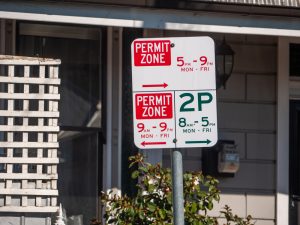
Understanding parking signs in Australia is essential for anyone driving in the city, whether you are a local, a new resident, or a visitor. The combination of symbols, numbers, and time limits can be confusing at first, but learning how to read them correctly helps you avoid unnecessary fines and parking issues.
In this guide, we explain how to interpret time limits and other common parking sign elements, so you can park with confidence anywhere in Australia.
Australian parking signs use a mix of numbers, letters, colours, and arrows to show where, when, and how long you can park. Understanding these elements helps you quickly determine if a space is suitable for your vehicle and how long you can stay.
Key elements to look for:
When multiple signs are stacked, always read from top to bottom. The top sign usually applies to all vehicles, while lower signs may list specific conditions or exceptions.
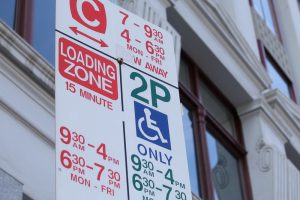
Time limits on Australian parking signs help manage space availability and traffic flow. Common limits include ¼P (15 minutes), ½P (30 minutes), 1P (1 hour), 2P (2 hours), or 4P (4 hours). Shorter limits usually apply in busy areas such as shopping streets, while longer limits are found in residential or less congested zones.
You may also encounter dual or multiple parking signs on one post. This usually means that the restriction changes depending on the day or time. For example, some signs may show different time limits for various periods, such as “1P 8 am–6 pm Mon–Fri” and “2P Sat.”
Make sure to always read each section carefully before parking because parking inspectors regularly patrol timed areas during the hours shown on the sign. They record the time your vehicle was first sighted and may issue a ticket if you exceed the allowed period.
Restrictions only apply during the stated days and times; outside those hours, parking is typically unrestricted.
Australian parking signs can be unfamiliar at first, especially if you’re new to driving in Australia or visiting from overseas. However, the practical tips below will help you avoid fines and park more confidently.
You can also reserve a parking spot in advance with Parkhound, which is available via web platform and mobile app. Parkhound makes it easy to book secure, reliable, and affordable parking in advance wherever you are in Australia.
Reading parking signs in Australia may seem complicated at first, but with a bit of attention, it quickly becomes second nature. Understanding time limits, arrows, and special conditions helps you avoid fines and keeps traffic moving smoothly.
Finally, if you encounter multiple signs on one post, make sure to read every sign before leaving your car, and check if other signs are in the area. Being aware of the local parking rules and understanding the signs will ensure a stress-free experience and prevent costly mistakes. If in doubt, check your local council’s website for parking maps and updates.
Louise is an SEO Writer for Spacer Technology, creating content for the Parkhound, WhereiPark, Spacer.com.au, and Spacer.com brands. Based in the Philippines, she transitioned from her government office job to copywriting in 2012 and has stayed in content production since.
Louise is an SEO Writer for Spacer Technology, creating content for the Parkhound, WhereiPark, Spacer.com.au, and Spacer.com brands. Based in the Philippines, she transitioned from her government office job to copywriting in 2012 and has stayed in content production since.
This will close in 0 seconds
This will close in 0 seconds