
 Written by:
Zarah Mae Torrazo is Head of Content at Spacer Technologies, the company behind Parkhound, WhereiPark, and Spacer.com. With 10 years of writing experience in parking, real estate, and finance, she creates content that helps drivers save money and property owners earn income from their space.
 Edited by:
Louise is an SEO Writer for Spacer Technology, creating content for the Parkhound, WhereiPark, Spacer.com.au, and Spacer.com brands. Based in the Philippines, she transitioned from her government office job to copywriting in 2012 and has stayed in content production since.
 Reviewed by:
Born with an innate entrepreneurial spirit and a thirst for all things tech, Mike founded his first business at the age of 14 by developing websites for SMEs in the mid-90’s. Now with decades of hands-on experience building startups, Mike is a seasoned tech entrepreneur with a proven track record of scaling high-growth tech companies.
It depends. Short-term parking can increase utilisation, but only buildings with clear access rules and turnover tolerance tend to benefit.
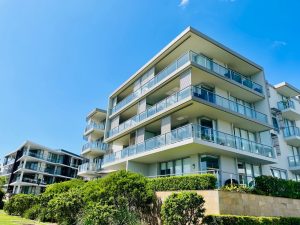
Many Australian apartment buildings are sitting on underutilised parking. Research from RMIT University found that around 20% of apartment households have more parking spaces than they need, while others have none, leaving a large share of off-street parking unused for long periods.
Car ownership remains lowest and slowest-growing in Australia’s largest inner-city areas, particularly Sydney and Melbourne, where higher density and transport alternatives reduce reliance on private vehicles.
A study from the Australian HR Institute also showed hybrid work remains the dominant model in Australian workplaces, with most employees attending the office two to three days a week or with no fixed attendance requirement. This, in turn, significantly reduces full-week demand for workplace parking.
Recent reports also indicate a whopping 83% of AU companies intend to hire over 60% of their workforce as remote workers.
Together, these shifts leave more parking sitting empty, while buildings still carry the cost of maintaining it.
For building owners and managers, this raises a practical question. How should vacant parking be managed? Short-term parking rentals can put empty bays to work, while long-term arrangements offer predictability and lower turnover.
This guide explains the practical trade-offs between short-term and long-term parking rentals, helping property owners and managers decide whether short-term parking is the right fit for their building.
Many buildings have parking spaces that sit empty due to hybrid work or irregular use. Parkhound for Business lets property teams offer short-term or long-term parking with clear access rules and minimal admin work.

Short-term parking typically means parking that is not tied to a long-term lease or exclusive user. These bookings are time-bound and designed to meet variable demand rather than ongoing residency needs.
This usually includes:
Before we dive into the pros and cons of short and long term parking, the table below summarises the key differences between short-term and long-term parking rentals, making it easier to compare revenue, utilisation, and operational trade-offs at a glance.
| Factor | Short-Term Parking Rentals | Long-Term Parking Rentals |
| Revenue model | Variable income tied to actual usage | Fixed, recurring income |
| Revenue upside | Higher during periods of fluctuating or peak demand | Limited to agreed rates |
| Bay utilisation | Higher utilisation when demand is irregular | Bays may sit unused when usage varies |
| Income predictability | Less predictable month to month | Highly predictable |
| Demand type | Visitors, contractors, casual and occasional users | Regular, committed parkers |
| Flexibility | Easy to adjust availability as needs change | Locked in for the duration of agreements |
| Operational effort | More coordination required | Lower ongoing involvement |
| Access management | More frequent access changes | Stable, single-user access |
| Security considerations | Requires clearer controls and processes | Easier to monitor and enforce |
| Residential suitability | Often limited by strata rules | Generally better aligned |
| Mixed-use suitability | Well suited to variable, short-term demand | Less responsive to changing needs |
Short-term parking rentals maximise utilisation by matching parking supply to fluctuating, day-by-day demand, rather than locking bays into fixed arrangements that often go underused.
Short-term parking rentals improve utilisation, but they come with trade-offs around predictability, operations, and access control that property teams need to consider carefully.
Because long-term parking is often the alternative to short-term use, buildings need to understand the benefits and trade-offs of locking bays into ongoing arrangements.
Long-term parking rentals provide stability, but they can limit utilisation and reduce a property management team’s ability to respond to changing demand.
The factors below can help determine which parking model is most appropriate for your building.
Residential buildings usually prioritise consistency and limited turnover. Commercial and mixed-use buildings can often accommodate more variability if access and management systems allow it.
Buildings in CBDs, near hospitals, universities, or event precincts tend to experience uneven demand. Suburban or residential-focused locations are more likely to suit steady, ongoing use.
Buildings with automated access, clear permissions, or flexible controls can support more frequent changes. Manual systems or shared access points typically favour simpler arrangements.
Some strata committees are comfortable with regular changes in who uses the parking spaces. Others prefer a fixed set of known users. This tolerance often determines what is practical, regardless of demand.
Some property teams prioritise predictable income and minimal oversight. Others are willing to accept variability in exchange for higher utilisation. Being clear about this preference helps avoid friction later.
Parkhound supports both short-term and long-term parking models by formalising access, payments, and records, without forcing buildings into informal or hard-to-manage arrangements.
All parking use is tied to a confirmed booking. This removes ambiguity around who is authorised to park and when, regardless of duration.
Access conditions are defined upfront and applied consistently. This reduces confusion, misuse, and one-off exceptions that often arise with informal arrangements.
Payments, booking history, and usage records are handled in one place. This creates a clear audit trail and avoids off-platform payments or manual reconciliation.
While physical handovers may still be required, Parkhound provides a consistent process for managing them. This avoids reliance on emails, texts, or side agreements that increase risk.
Short-term parking rentals can work for some buildings and cause headaches for others. It comes down to how the building operates and how much change it can comfortably handle.
If a building has clear access rules, can manage turnover, and is set up to handle variable use, allowing short-term parking can make sense. If it relies on fixed access, predictable routines, and minimal disruption, long-term parking is usually the safer option.
The real risk isn’t short-term or long-term parking. It’s unmanaged parking. When arrangements are clear and controlled, either model can work. When they’re not, problems tend to show up fast.
For buildings that want to support either model without relying on informal agreements, Parkhound for Business provides a structured way to manage bookings, access, and records while keeping control with the property team.
Zarah Mae Torrazo is Head of Content at Spacer Technologies, the company behind Parkhound, WhereiPark, and Spacer.com. With 10 years of writing experience in parking, real estate, and finance, she creates content that helps drivers save money and property owners earn income from their space.
Zarah Mae Torrazo is Head of Content at Spacer Technologies, the company behind Parkhound, WhereiPark, and Spacer.com. With 10 years of writing experience in parking, real estate, and finance, she creates content that helps drivers save money and property owners earn income from their space.
This will close in 0 seconds
This will close in 0 seconds