
 Written by:
Zarah Mae Torrazo is Head of Content at Spacer Technologies, the company behind Parkhound, WhereiPark, and Spacer.com. With 10 years of writing experience in parking, real estate, and finance, she creates content that helps drivers save money and property owners earn income from their space.
 Edited by:
Louise is an SEO Writer for Spacer Technology, creating content for the Parkhound, WhereiPark, Spacer.com.au, and Spacer.com brands. Based in the Philippines, she transitioned from her government office job to copywriting in 2012 and has stayed in content production since.
 Reviewed by:
Born with an innate entrepreneurial spirit and a thirst for all things tech, Mike founded his first business at the age of 14 by developing websites for SMEs in the mid-90’s. Now with decades of hands-on experience building startups, Mike is a seasoned tech entrepreneur with a proven track record of scaling high-growth tech companies.
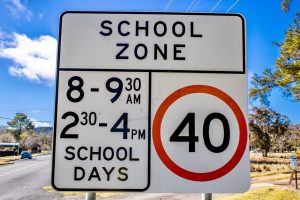
It’s back to school season and if you’re a parent or a guardian, you know what this means. It’s back to facing heavy traffic, smaller parking windows and any margin for error becomes smaller during morning routines.
Analysis shared by motoring and transport bodies such as Royal Automobile Association of South Australia showed that travel times increase sharply once the school term begins.
Even arriving a little earlier does not always guarantee a space, especially during afternoon pick-up. Let’s not forget the sudden change in schedules and routines due to different things.
So what might work for parking in week one often breaks by week three. This is where some families start looking for longer-term parking options. Not because they want to park closer, but because they want consistency. Knowing where you can park each day removes one daily decision from an already tight schedule.
This guide compares monthly and casual parking near schools, focusing on cost, predictability, and how each option fits into everyday routines.
Across Australia, the school year starts in late January to early February 2026, with most states and territories resuming classes between 27 January and 5 February.
Australian School Term Dates 2026 (Government Schools):
| State / Territory | Term 1 Start | Term 1 End | Term Structure |
| New South Wales (Eastern) | 27 Jan 2026 | 2 Apr 2026 | 4 terms |
| New South Wales (Western) | 3 Feb 2026 | 2 Apr 2026 | 4 terms |
| Victoria | 27 Jan 2026 | 2 Apr 2026 | 4 terms |
| Queensland | 27 Jan 2026 | 2 Apr 2026 | 4 terms |
| South Australia | 27 Jan 2026 | 10 Apr 2026 | 4 terms |
| Western Australia | 2 Feb 2026 | 2 Apr 2026 | 4 terms |
| Tasmania | 5 Feb 2026 | 17 Apr 2026 | 4 terms |
| Australian Capital Territory | 30 Jan (new) / 2 Feb (returning) | 2 Apr 2026 | 4 terms |
| Northern Territory | 29 Jan 2026 | 2 Apr 2026 | 4 terms |
Note: Dates are based on government school calendars. Always confirm term dates with your state education department or individual school.
Once the school term starts, parking pressure returns almost immediately. Traffic peaks at the same times every weekday, especially during morning drop-off and afternoon pick-up.
These peak windows concentrate demand into short periods. Areas around schools and campuses feel it first, as more drivers arrive at the same time and stay for similar lengths of time.
During school hours, fewer kerbside spaces are available near schools. Parking that works outside of term is often unavailable when it is needed most. This pushes drivers into nearby streets, where spaces fill quickly.
Enforcement also becomes more visible early in the term. Short stops become harder to manage, and drivers have less flexibility if plans run late.
Parents are not the only ones looking for parking. Carers, tutors, buses, rideshare vehicles, staff, and local residents are all competing for the same limited space during peak periods.
Over time, it is this daily repetition that causes problems. Casual parking might work occasionally, but it becomes unreliable once the school routine settles in.
Investing in a monthly parking space may feel like a big upfront cost. But once parking becomes a daily problem in your routine, it’s time to consider locking in a guaranteed parking spot.
Here are some scenarios when a monthly parking space is the best parking solution for your needs:
Do you have the same routine, five days a week? If you’re arriving at similar times most weekdays, even short visits start to add friction. Knowing where you can park removes one decision from an already fixed routine.
For example, you might be dropping one child at primary school and heading to a different campus for the next pick-up. When you’re moving between locations, timing is tight and there’s little room to search for parking. Having a guaranteed space makes sure you’re not wasting time looking for parking.
After-school activities can stretch pick-ups out. Sport training, music lessons, tutoring, or clubs don’t always finish quickly, and casual parking limits are often too short for the wait.
When pick-ups are shared between you and someone else, like a grandparent or carer, parking works best when it doesn’t need explaining every time.
Monthly parking isn’t always the right choice. For some routines, casual parking is still the more practical and cost-effective option.
Casual parking tends to work best when parking is occasional, flexible, or changes from week to week.
If you’re not parking there every weekday, paying monthly can be unnecessary. Casual parking lets you pay only on the days you actually need a space.
When pick-up and drop-off times vary, committing to one fixed spot doesn’t always make sense. Casual parking gives you more flexibility to park closer or further away depending on the day.
If you’re in and out quickly and rarely need to wait, short-stay parking can still work well. In these cases, casual parking limits usually line up with how long you’re there.
Casual parking is often the better option during short periods, like the first few weeks of term, temporary schedule changes, or one-off commitments.
For most people, the decision between casual and monthly parking comes down to cost, especially once school routines are locked in.
To show how this plays out in practice, take Ashfield as an example. The area has several nearby schools, including Ashfield Public School and Ashfield Boys High School, which creates steady weekday demand during drop-off and pick-up times.
Based on Parkhound listings, casual daily rates in Ashfield vary by space type. Outdoor and basic spaces tend to sit at the lower end of the range, while undercover, indoor, or more secure spaces are priced higher. Across these types, daily rates typically fall between $7 and $16 per day.
Monthly parking shows the same pattern. Pricing depends on the type of space and level of access, but monthly rates in the area commonly range from $234 to $293 per month.
For people parking regularly, that fixed cost often ends up lower than the total spent on daily bookings across the same period. The main benefit is not just the total amount, but avoiding the higher end of daily rates when lower-cost spaces are unavailable.
Casual parking often comes with extra time costs. Searching for a space during peak hours can lead to additional driving or paying again if you need to move the car.
Monthly parking usually means walking a short distance, but you know where you’re parking and how long you can stay. That predictability helps avoid unexpected extra charges.
If a pick-up runs late, casual parking can force quick decisions that increase cost. Monthly parking avoids that pressure by removing short stay limits.
| Cost factor | Casual parking | Monthly parking |
| How you pay | Per day | Per month |
| Example rates (Ashfield) | $7–$16 per day | $234–$293 per month |
| Cost certainty | Changes week to week | Fixed for the month |
| Impact of delays | Can increase cost | Usually unchanged |
A parking space only works if it fits how school days actually run. These are the things that matter once traffic picks up.
Closer is not always better. Streets right next to schools are often the slowest during drop-off and pick-up. Think about walking time. A spot a short walk away can be easier to reach and leave.
Check when you can enter and leave. Some spaces have limits or shared access.Make sure the hours cover early arrivals, late pick-ups, and after-school activities.
Both options can work. What matters is access.
Residential spots need clear instructions. Commercial car parks may have shared traffic. Choose the one that stays predictable during school hours.
School routines shift. Timetables change. Activities get added. A good monthly spot lets you adjust or cancel without hassle.
This is easy to miss but it also causes a lot of problems if overlooked. Look for clear directions on entry, parking position, and anything to avoid. This matters even more if different people use the space.
Neither option is better by default. Monthly parking tends to work better for regular, weekday routines. Casual parking usually suits occasional or short visits.
Monthly parking usually starts to make sense when you’re parking most school days. If you only park once or twice a week, casual parking is often the cheaper option.
Sometimes, yes. Streets closest to schools can be the slowest during peak times. A spot a short walk away can be easier to access and quicker overall.
With casual parking, running late can mean moving the car or paying again. Monthly parking avoids short time limits, which gives more flexibility when schedules change.
In most cases, yes, as long as the listing allows it and access instructions are followed. This can be helpful when pick-ups are shared between different people.
It depends on how often you park.
The more regular your routine, the more monthly parking tends to fit. For anything irregular, casual parking is usually enough.
This is where Parkhound fits naturally into the picture.
Parkhound listings are often located in nearby residential driveways or private bays, just outside the busiest school-zone streets. That can make access more predictable during drop-off and pick-up times.
You can choose daily or monthly parking based on what suits your routine. Spaces can be filtered by distance from the school, access hours, and how long you need to park, as well as features like accessible parking or EV charging.
Parkhound operates across most major cities and suburbs, including many areas with high school-day parking demand. That makes it easier to find parking in familiar school zones, whether you need something flexible for a day or more predictable for the month.
Zarah Mae Torrazo is Head of Content at Spacer Technologies, the company behind Parkhound, WhereiPark, and Spacer.com. With 10 years of writing experience in parking, real estate, and finance, she creates content that helps drivers save money and property owners earn income from their space.
Zarah Mae Torrazo is Head of Content at Spacer Technologies, the company behind Parkhound, WhereiPark, and Spacer.com. With 10 years of writing experience in parking, real estate, and finance, she creates content that helps drivers save money and property owners earn income from their space.
This will close in 0 seconds
This will close in 0 seconds